
What is an AI agent for business, and how is it not just another chatbot?
An AI agent answers your customers from your own content, in their language, and calls in a person when it should. Here is how that differs from the chatbots most of us hate, and how to start without a big project.
Most of us have been stuck in a chatbot that answers "I didn't understand, please choose an option" three times in a row. So when someone says "AI agent", it is fair to roll your eyes. Let's skip the buzzwords and say what it actually is.
An AI agent for business is a program that talks to your customers in plain language, answers from the information you gave it, and knows when to say "let me get a person". That's it. No magic, but quite a lot of use.
Where a chatbot breaks and an agent doesn't
A classic chatbot is a flowchart. Somebody sat down, drew every path, and the bot walks along them. The moment a customer writes "do you deliver to the island on Sundays?", which was nobody's button, it gets lost.
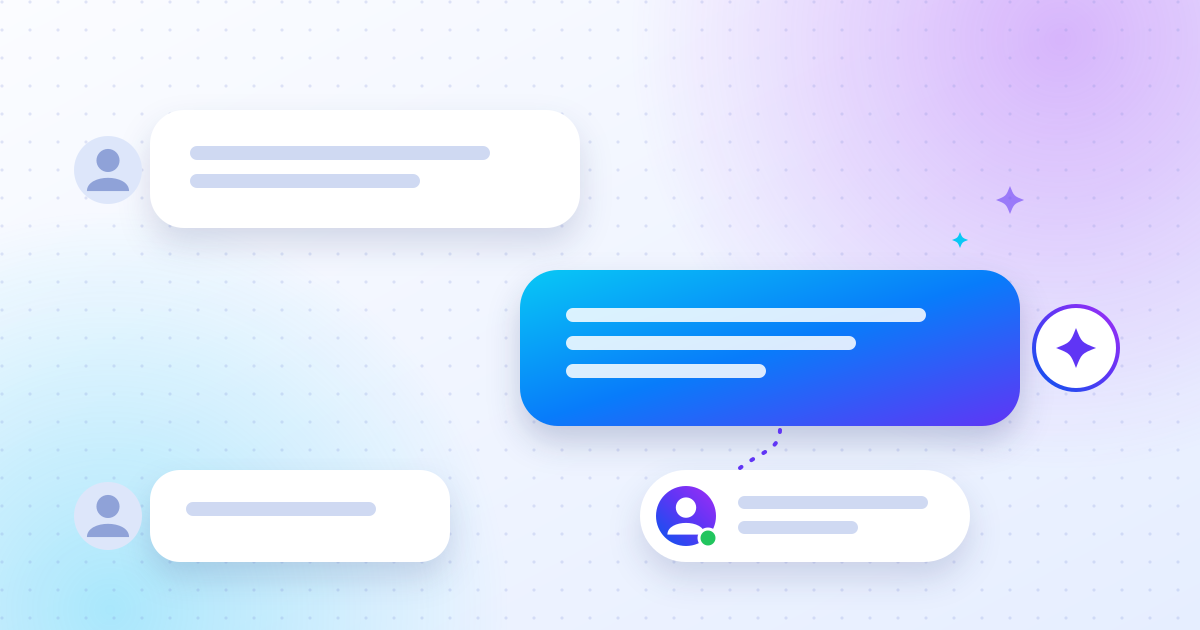
An agent reads the question like a colleague would. It looks through your pages, policies and answers you have approved, and writes a reply in the customer's own language. It remembers what was said two messages ago, so "and the second option?" still makes sense. And when the question gets tricky or touchy, it doesn't bluff. It brings in a human.
What it is really good at
Think about what your team answers every single week. Opening hours. Delivery. How one service differs from another. Which page has the price list. Whether you can return something. These questions are repetitive, they come in at 11 p.m., and a quick answer often decides whether the person stays or goes to a competitor.
That is where an agent earns its place. Not by replacing your people, but by taking the boring, repeated part so they can spend time on the conversations that need judgment.
What it should not do alone
Let's be honest about this too. An agent shouldn't invent facts, promise a discount nobody approved, or handle a refund dispute or a legal question by itself. The setup that works is simple: give it good content, test it with nasty questions, and keep a human one click away.
How we built ours
ARIXIK has two agents, and each has its own plan and settings. The Website Assistant answers visitors from your site content, as a chat widget on your page and in Telegram. The Catalog Assistant works with your product catalog: it asks what the customer actually needs, then helps compare items before recommending one.
You can run both in the same organization. Every conversation lands in one dashboard, the agent replies in the visitor's language (the widget speaks 15 of them), and a team member with the right role can jump into the chat. That works on every plan.
How to start without a big project
- Write down the 20 questions your team answers most.
Frequently asked questions
- Is an AI agent the same thing as a chatbot?
- Not really. A classic chatbot follows paths someone drew in advance. An agent understands free-form questions, answers from your own content and can hand the chat to a person.
- Will it make things up?
- It is built to answer from the content and rules you give it. Keep that material accurate, test it with tricky questions, and let your team take over the complicated chats.
- Can my team join a conversation?
- Yes, on every plan. The team member just needs the right role and access in the organization dashboard.
- Do I have to pay to try it?
- No. Browsing the products, creating an account and asking for a demo are all free.